


Unlocking Reliability: Your Friendly Guide to ASTM A194 Nuts
Ever wondered what keeps massive industrial pipelines, pressure vessels, and power generators securely fastened, even under extreme conditions? The unsung heroes are often specialized fasteners, and among them, ASTM A194 nuts play a starring role. If you're involved in industries like oil & gas, power generation, or chemical processing, understanding ASTM A194 isn't just helpful – it's crucial for safety, efficiency, and project success. Let's dive into what makes these nuts so special and why they're indispensable in the world of high-performance engineering.
What Exactly is ASTM A194? More Than Just a Nut
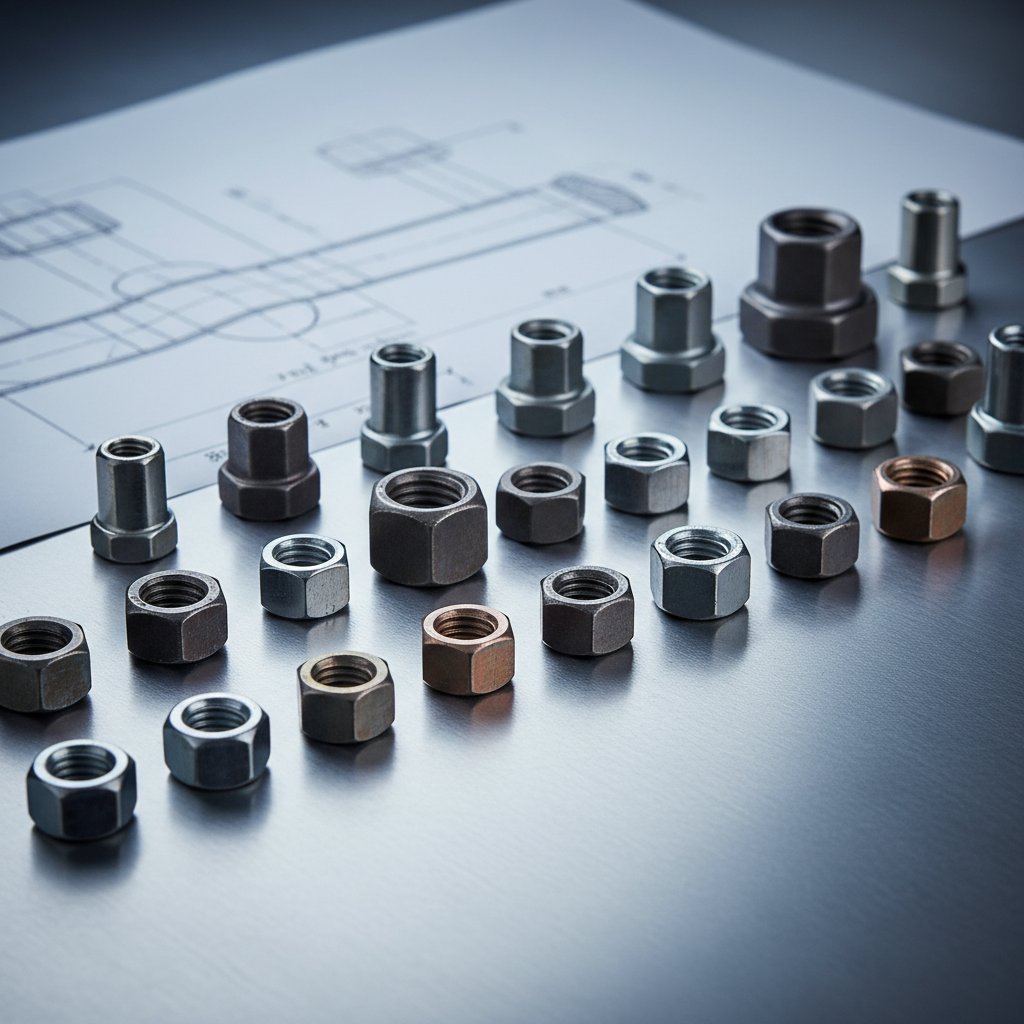
ASTM A194 is a material specification from ASTM International, a globally recognized leader in developing and delivering international voluntary consensus standards. Specifically, ASTM A194 covers "Carbon and Alloy Steel Nuts for Bolts for High-Pressure or High-Temperature Service, or Both." In simpler terms, it sets the standards for manufacturing nuts that can withstand the intense heat and pressure found in demanding industrial environments without failing.
These nuts are typically designed to be paired with bolts conforming to specifications like ASTM A193 (for alloy-steel and stainless steel bolting materials for high-temperature or high-pressure service) or ASTM A320 (for alloy-steel and stainless steel bolting materials for low-temperature service). The synergy between the bolt and the nut, both manufactured to precise standards, ensures the integrity of critical bolted joints.
The importance of this specification cannot be overstated. When you're dealing with steam pipes carrying superheated steam, reactors operating at extreme pressures, or flanges in a corrosive chemical plant, the failure of a single nut can have catastrophic consequences, leading to leaks, equipment damage, environmental hazards, and even loss of life. ASTM A194 provides the assurance that the nuts used in these scenarios have been rigorously tested and meet stringent material and manufacturing requirements.
Exploring the Diverse World of ASTM A194 Grades
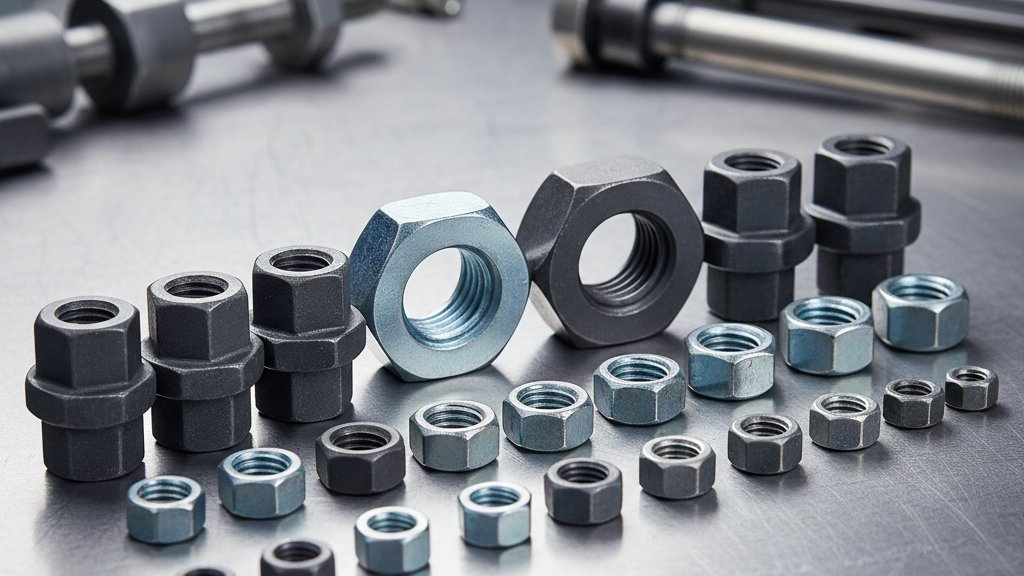
Just like different jobs require different tools, various high-temperature and high-pressure applications demand nuts with specific material properties. This is where the different "grades" within ASTM A194 come into play. Each grade signifies a particular material composition and heat treatment, offering unique characteristics for specific service conditions. Let's look at some of the most common and important ones:
Common ASTM A194 Grades and Their Applications:
- Grade 2H: This is arguably the most common and widely used ASTM A194 grade. It's a heavy hex nut made from carbon steel, heat-treated (quenched and tempered) to achieve specific strength and hardness properties. Grade 2H nuts are very popular for general high-temperature applications up to 800°F (427°C) and are often paired with ASTM A193 B7 bolts. Their excellent balance of strength and cost-effectiveness makes them a go-to choice for many industrial applications, including piping, valves, and pressure vessels in power plants and refineries.
- Grade 4: This grade is made from carbon-molybdenum steel, also heat-treated. It offers higher strength than Grade 2H, making it suitable for applications requiring enhanced load-bearing capabilities at elevated temperatures. Grade 4 nuts are less common than 2H but find use where the demands exceed the capabilities of 2H, often paired with A193 B7 or B16 bolts.
- Grade 7: Similar to Grade 2H in its heat treatment, Grade 7 nuts are manufactured from alloy steel (chromium-molybdenum steel). They offer superior strength and are designed for high-temperature service, often used with ASTM A193 B7 bolts, especially in applications where higher tightening loads and sustained elevated temperatures are expected. Their robust nature makes them ideal for demanding pressure vessel and flange connections.
- Grade 8: This grade signifies a stainless steel nut, specifically AISI 304 stainless steel. Grade 8 nuts offer excellent corrosion resistance, especially in non-chlorine environments, and are suitable for moderately high temperatures. They are not heat-treated in the same way as carbon or alloy steel nuts; their strength comes from their inherent material properties. They are frequently paired with ASTM A193 B8 bolts.
- Grade 8M: An austenitic stainless steel nut, Grade 8M is made from AISI 316 stainless steel. The addition of molybdenum in 316 stainless steel significantly enhances its corrosion resistance, particularly against pitting and crevice corrosion in chloride-containing environments. This makes Grade 8M nuts indispensable in marine, chemical processing, and pharmaceutical industries where exposure to corrosive agents is a concern. They are typically used with ASTM A193 B8M bolts.
- Grade 8T: This grade is made from AISI 321 stainless steel, a titanium-stabilized austenitic stainless steel. The titanium content helps prevent carbide precipitation during welding and high-temperature exposure, which can otherwise lead to intergranular corrosion. Grade 8T nuts are used in applications where high-temperature service and resistance to intergranular corrosion are critical, often with ASTM A193 B8T bolts.
- Grade 8C: Made from AISI 347 stainless steel, a niobium (columbium) and tantalum-stabilized austenitic stainless steel. Similar to Grade 8T, the stabilization prevents carbide precipitation, offering excellent resistance to intergranular corrosion, especially after welding. Grade 8C nuts are used in similar critical high-temperature, corrosive environments to 8T, often with ASTM A193 B8C bolts.
Why ASTM A194 Matters: Key Benefits for Your Projects
The rigorous standards of ASTM A194 aren't just bureaucratic hurdles; they deliver tangible benefits that are critical for industrial operations:
- Uncompromised Reliability: When you specify ASTM A194 nuts, you're choosing fasteners designed and tested to perform reliably under the most challenging conditions of heat and pressure. This minimizes the risk of joint failure, leaks, and potential accidents.
- Enhanced Safety: In industries handling hazardous materials or extreme energies, fastener failure can lead to catastrophic events. ASTM A194 nuts contribute significantly to the overall safety of personnel and plant operations by maintaining the integrity of bolted connections.
- Long-Term Durability: These nuts are engineered not just for immediate strength but for sustained performance over time. Their resistance to creep, relaxation, and thermal degradation at elevated temperatures ensures a longer service life for critical equipment, reducing maintenance downtime and costs.
- Global Interchangeability: ASTM standards are recognized worldwide. This means that an ASTM A194 Grade 2H nut manufactured in one country will have the same performance characteristics as one manufactured anywhere else, ensuring consistency and ease of sourcing for global projects.
- Optimized Performance: By selecting the correct ASTM A194 grade, engineers can fine-tune bolted connections to perfectly match the specific demands of an application, ensuring optimal load transfer and structural integrity.

Applications Across Critical Industries
Due to their exceptional properties, ASTM A194 nuts are found in the most demanding industrial settings:
- Oil & Gas Industry: From offshore platforms to refineries and petrochemical plants, A194 nuts secure flanges, valves, and pressure vessels that handle highly volatile and corrosive fluids at extreme temperatures and pressures.
- Power Generation: In thermal, nuclear, and even some renewable energy plants, these nuts are vital for boilers, steam turbines, heat exchangers, and high-pressure piping systems where consistent performance under intense heat is paramount.
- Chemical Processing: Plants dealing with aggressive chemicals often require the corrosion resistance offered by stainless steel ASTM A194 grades (like 8M) to prevent leaks and maintain process integrity.
- Pressure Vessels & Boilers: Any equipment designed to contain gases or liquids at high pressures relies heavily on the strength and sealing capability provided by A194 nuts.
- Flanges and Piping Systems: A ubiquitous application, these nuts are used extensively to connect pipe sections and equipment flanges, forming leak-tight seals crucial for fluid transport.
Manufacturing and Quality Control: Precision is Key
Producing ASTM A194 nuts isn't a simple process; it involves meticulous attention to detail at every stage:
- Material Selection: Only high-quality carbon, alloy, or stainless steels meeting specific chemical compositions are used.
- Forming: Nuts are typically hot-formed or cold-formed, depending on the material and size, to achieve their basic shape.
- Heat Treatment: For grades like 2H, 4, and 7, precise heat treatment (quenching and tempering) is critical to develop the required mechanical properties, including hardness and strength. This process is carefully controlled to achieve the desired microstructure.
- Machining and Threading: The nuts are then machined to their final dimensions, and threads are precisely cut or rolled to ensure compatibility with corresponding bolts and optimal load distribution.
- Testing: Each batch of ASTM A194 nuts undergoes rigorous testing. This includes hardness tests (e.g., Brinell or Rockwell), proof load tests (to ensure the nut can withstand a specified tensile force without failure), and potentially other tests like impact testing for low-temperature applications or chemical analysis to confirm material composition.
- Certification: Manufacturers provide material test reports (MTRs) or certificates of conformity, detailing the chemical analysis, mechanical properties, and heat treatment specifics, ensuring traceability and adherence to the standard.
Choosing the Right ASTM A194 Grade: A Critical Decision
Selecting the appropriate ASTM A194 grade is a critical engineering decision that depends on several factors:
- Operating Temperature: The primary consideration. Different grades have varying capabilities at elevated temperatures.
- Operating Pressure: High pressures demand nuts with superior strength to prevent deformation or failure.
- Corrosive Environment: Presence of chemicals, acids, chlorides, or moisture dictates the need for corrosion-resistant stainless steel grades.
- Required Strength: The tensile strength and yield strength needed for the bolted joint.
- Compatibility with Bolts: Ensuring the nut grade is compatible with the specified bolt grade (e.g., A194 2H with A193 B7).
- Cost Considerations: While safety and performance are paramount, cost-effectiveness is always a factor in large-scale projects.
Consulting with material specialists and adhering to engineering specifications is always recommended to ensure the optimal choice for any given application. Never compromise on the specified grade, as shortcuts can lead to catastrophic failures.
The Future of High-Performance Fasteners
As industries push the boundaries of extreme environments, the demand for even more robust and specialized fasteners will continue to grow. Research and development in material science are constantly exploring new alloys and manufacturing techniques to create nuts that can withstand even higher temperatures, more aggressive corrosive agents, and greater mechanical stresses. ASTM A194 will continue to evolve, incorporating these advancements to ensure that critical bolted joints remain secure and reliable, paving the way for safer and more efficient industrial operations worldwide.
Conclusion: The Unseen Pillar of Industrial Integrity
ASTM A194 nuts might be small components in the grand scheme of massive industrial plants, but their role is anything but minor. They are the silent guardians of countless critical connections, ensuring that high-pressure and high-temperature systems operate safely and efficiently. Understanding the different grades and their applications empowers engineers and project managers to make informed decisions that uphold the highest standards of reliability and safety. The next time you see a bolted flange in an industrial setting, remember the unsung heroes – the ASTM A194 nuts – diligently performing their vital task.


